Bobbin Springs Are Important
- Published:
- Length: 295 words
- Reading Time: 2 minutes
I like to keep track of how many stitches are going into a quilt while I'm quilting. This started as just a fun bit of information to see how much I was stitching, but it gave me an interesting data point during this latest project.
My tension started being a little flaky while quilting. By "flaky" I mean it was changing more than usual while quilting. This is bad because the top thread tends to start pulling to the back of my quilt, and if I'm not really on top of checking things, it can be a real problem. When the tension started acting up more than normal, I checked my total stitch count and I was approaching the 7.5 million mark. That's quite a few stitches, so maybe something else was going on.
Take a look at these two bobbin cases:
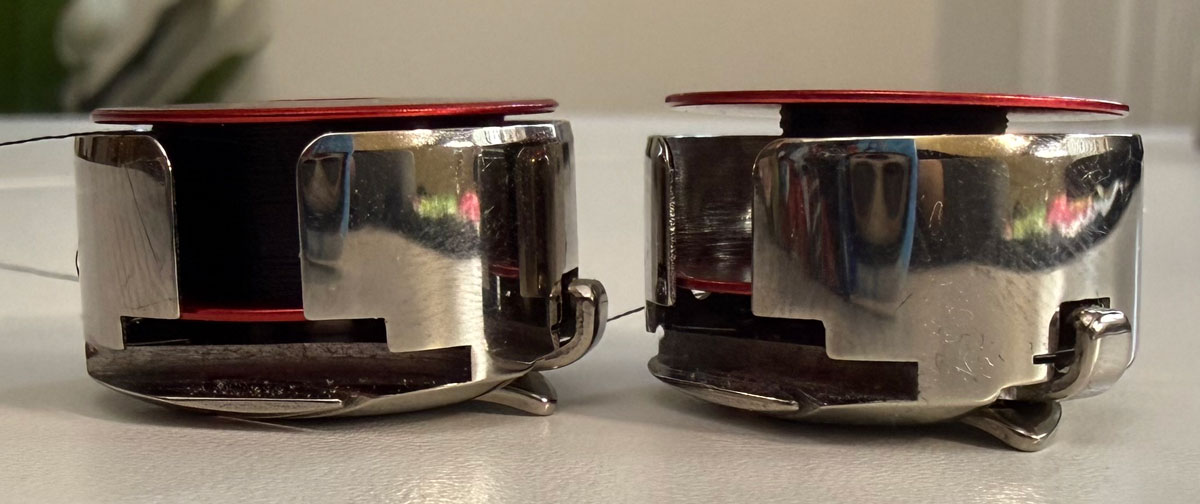
Do you see how the bobbin in the case on the right sits a little higher than the bobbin on the left? The bobbin case on the left is my original case that came with my Q20. The vast majority of those 7.5 million stitches were done using this case, and that quantity of work has taken its toll. The spring inside the case is worn out.
The spring inside this bobbin case looks like this:
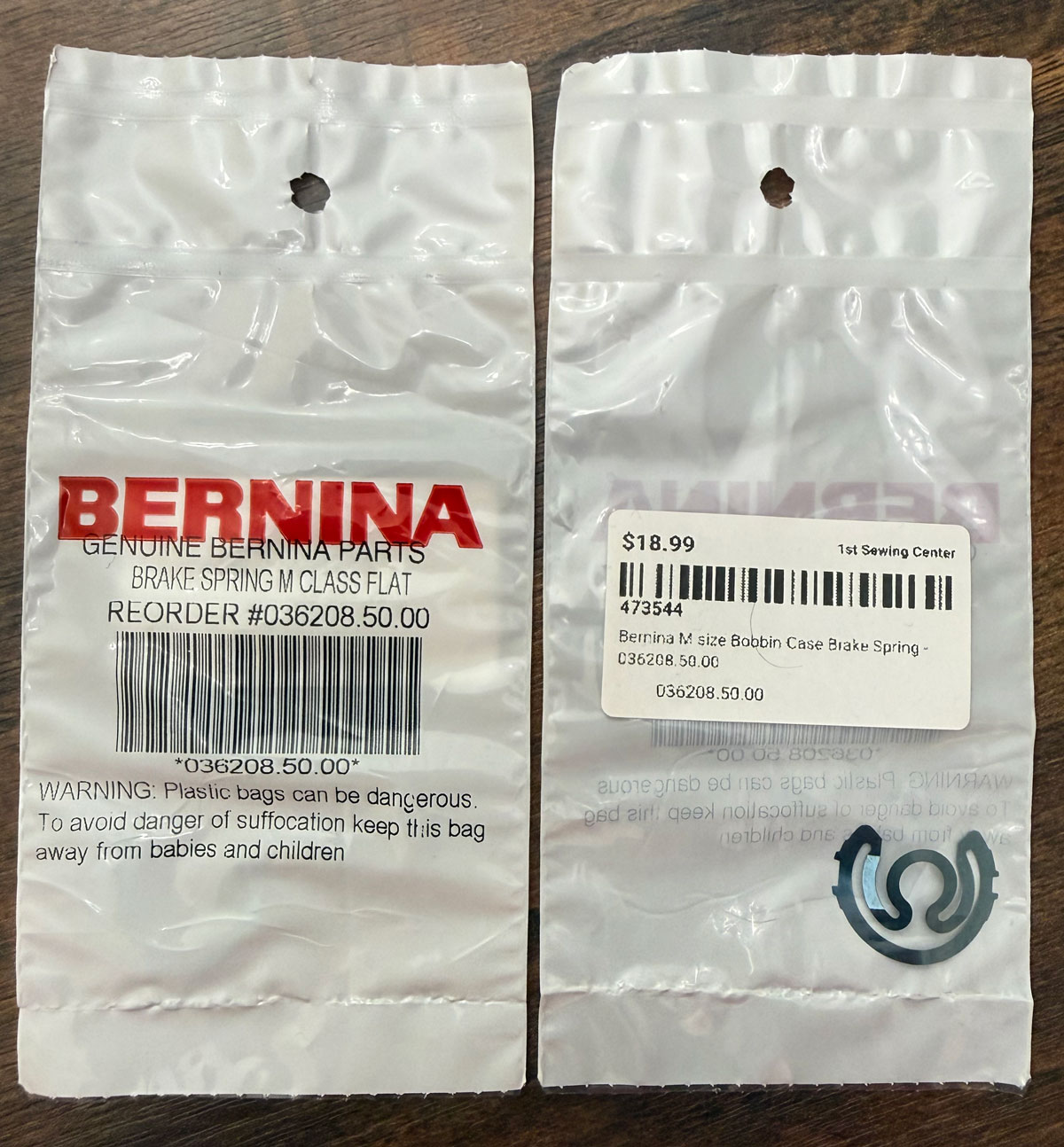
A bobbin spring gets worn down and less "springy" with use, which can greatly affect the bobbin thread tension. New springs aren't cheap, but they really make a difference. I swapped the old spring for a new one and that really helped stabilize my tension for the rest of the quilt.
The more you know!